A wiggly career path
Elin works at Leonardo as a Senior Systems Technician, working on protecting aircraft. She talks about how her career path was not what she originally intended.
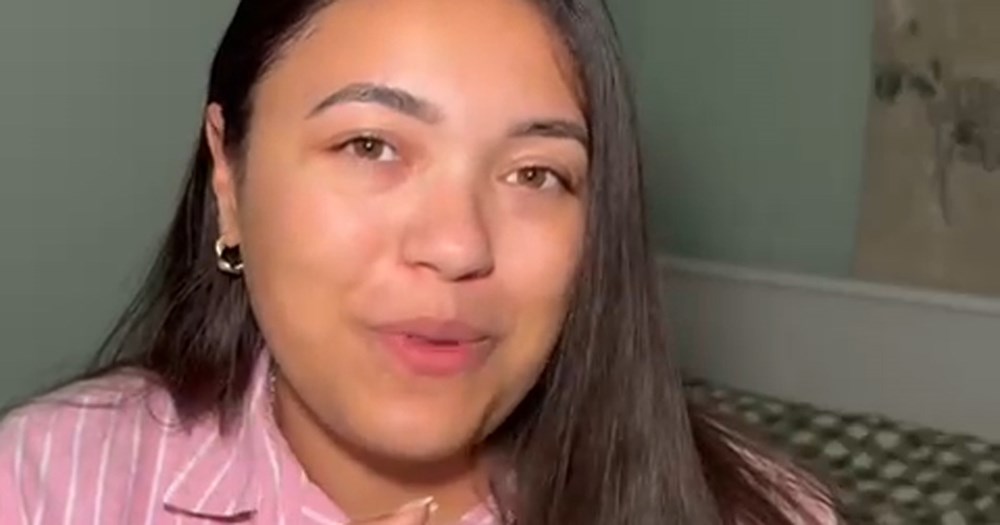
Hi, I’m Elin Esnard and I’m a Senior Systems Technician at a company called Leonardo. I just want to tell you a little bit about my job because I have not met many people who know what a Senior Systems Technician does or what we do at Leonardo. I put electronic defence systems onto aircraft; they basically protect the plane and keep it safe.
No 2 days in my job look the same because I am doing loads of different things all the time. For example, there could be an issue with the system and I have to go into the lab and put the system on a rig which emulates a real-life environment, then I fault-find and see what’s wrong.
The next minute I could be working with a customer on an airfield, again fault-finding using my systems knowledge to help them with their issues. I could be in development workshops working on brand new technology that we are going to implement in the future, or I could be flying around the country collecting data – it is so varied.
If my 16 or 18-year-old self was to see me now, I don’t think she would believe that I’ve got to where I am just because the route I took into industry was not traditional by any means. When I was in high school and sitting my GCSEs, all of my teachers told me that I was in the top 10% of students nationally and that I had to go to one of the big Russell Group universities.
I got taken to Oxford and Cambridge for tours around the universities, I went to conferences in London, and they were really pushing me to excel and achieve academically. So I thought that was the only route and the only way I was going to be successful.
I loved science, I loved planes, and I thought I wanted to be an engineer, so that sounded like a good route.
I started studying my A levels and did a 1-week work experience with Leonardo, which I absolutely loved, but then I went back to college and crashed and burned. I got diagnosed as dyslexic, so in my head I was thinking all these teachers have just told me that I’m really smart, but now I’ve got a diagnosis that literally says I’m stupid.
If you are also dyslexic, I don’t know what I was thinking because it doesn’t mean that you’re stupid – actually, dyslexics have higher than average IQs on the whole, so you’re probably smarter than everybody else.
My mental health was not in a good place and I don’t know how I got through, but I’m thankful that I did even though it was a very hard time. With this being said, I left sixth form with no A levels. I watched all my friends go off to university and I felt like a complete and utter failure; this was rock bottom.
I worked 3 jobs – in a builders’ merchant, as a waitress, and as a gymnastics coach – and I thought that was going to be it for me for the rest of my life. It wasn’t until one day I had this realisation that this was the highest I was ever going to be and I wasn’t going to progress any further in my career. I needed to pursue my passion of being an engineer or working in engineering, working in or around or with planes in any way, shape or form – I just had to do it.
So I picked myself up and applied for an apprenticeship. It was really hard because once you start earning money it’s difficult to go back to not earning anything, so I knew I couldn’t go back to university, and even if I wanted to, I didn’t have the grades to get in, which is why I didn’t go in the first place.
I sat myself down and told myself I had nothing else to lose; I could apply for this job and if I didn’t get it, I’d just be in exactly the same position anyway. Long story short, I got a call saying I had an interview, I got the job, and the rest is history.
I now work for one of the largest aerospace companies in the world and I do some pretty cool stuff – we even had Keir Starmer in the office a couple of months ago and I got to show him around.
Lastly, I wanted to say something that my mum always told me and that I say to everybody because it is so true: everything happens for a reason.
If I hadn’t failed my A levels and gone off to university, I wouldn’t have had the life experiences that I’ve had today. I wouldn’t have met the Prime Minister, I wouldn’t have gone flying around the country collecting data, and I wouldn’t have done all these crazy things that I’ve done in my career.
It’s just funny to look back and see how it all works out exactly as it should have done. If you don’t get the grades that you want to get or the job that you want to get, just remember everything happens for a reason. Just keep on going, and as long as you keep on going you end up exactly where you need to be.